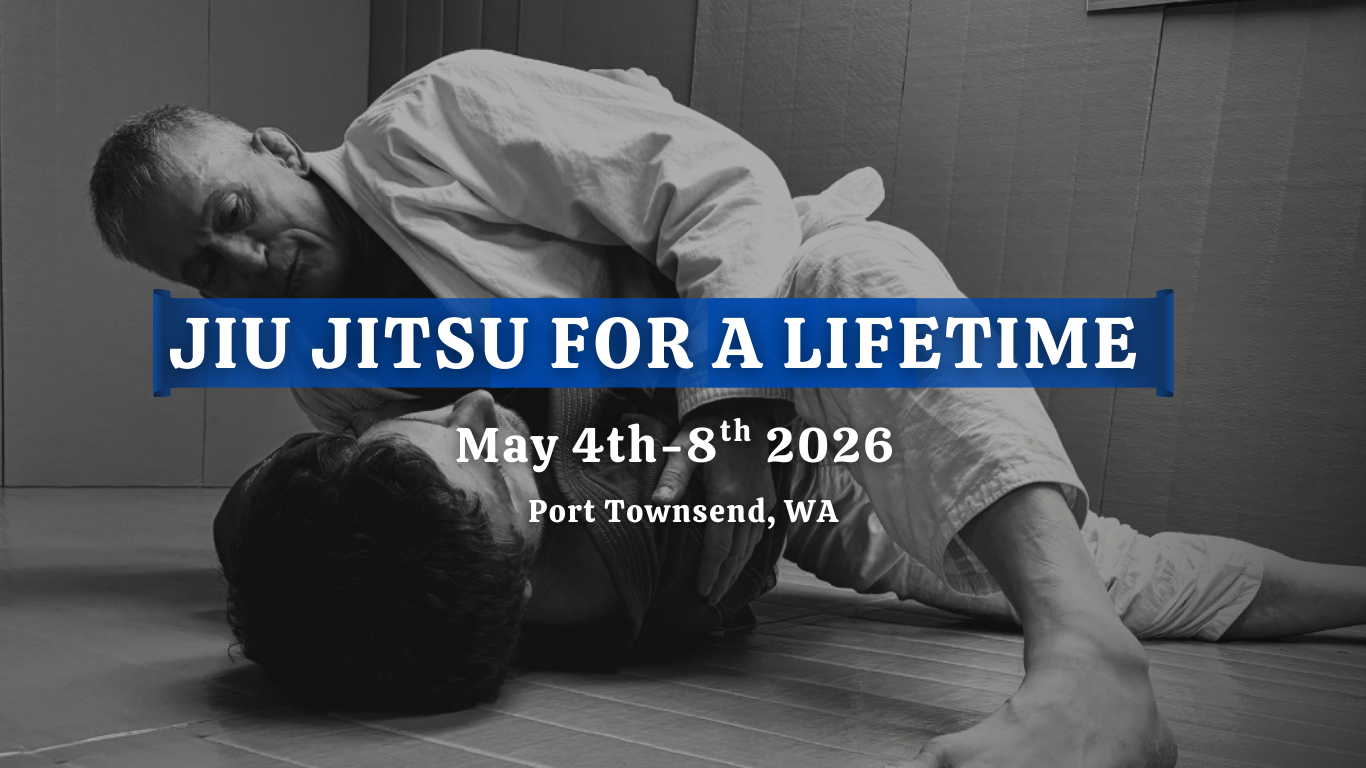
Principles for practicing Jiu-Jitsu into old age
I started jiu-jitsu when I was already 38 years old. According to the young guys, that’s already old! But I had wrestled all through junior high, high school, and college, even coaching wrestling at one point. Wrestling had been a very important part of my life.
After college, I continued wrestling, but it became difficult because training was scheduled in the middle of the workday. I was looking for something to replace wrestling … something that could fill that vacuum.
I tried various martial arts, including kung fu, karate, and kickboxing. I even found a Russian Sambo school, a wrestling-judo hybrid that I loved. Unfortunately, practice was held clear on the other side of the city, and getting there through rush-hour traffic was a bear.
An important aspect of aging well is maintaining good physical condition. Since I was already in the fitness business, I had that box ticked off. But I needed an outlet … something challenging, technical, and meaningful.
A friend called me about a seminar in New Jersey on something called “Gracie Jiu-Jitsu,” later known more widely as Brazilian Jiu-Jitsu. I was excited to check it out, and the seminar did not disappoint. It was conducted by Rorion Gracie and his two younger brothers. I was immediately in love.
What drew me in was the emphasis on technique, strategy, and mindfulness over brute strength. I realized instantly that this was what I wanted to learn. It would replace wrestling in my life.
Brazilian Jiu-Jitsu, a judo-derived system with primary emphasis on ground fighting, is well-suited for older practitioners. You don’t have to endure the savage throws and hard falls common in conventional judo. The Gracie system also emphasized realistic self-defense scenarios. For me, that was a real boon. Every man wants the ability to handle himself in a fight, even as he ages.
The Jiu-Jitsu I learned from the Gracies relied on positioning and control rather than speed. That makes it accessible and beneficial for the aging body.
When I first started at 38, I was powerful, fast, and strong. Like most wrestlers, I relied heavily on conditioning and strength. Some would have described me as a typical “spazzy white belt.”
But those assets eventually stopped working for me. By my mid-forties, I realized I would do far better relying on technique. I began developing precision, timing, and leverage. This conserved my energy and greatly reduced my risk of injury. I focused more on drilling and fundamentals.
Recovery also changed. In my forties, I no longer bounced back as quickly. In hindsight, I’ll tell you it’s critical to listen to your body…. something I didn’t always do. I suffered bouts of overtraining and exhaustion.
Although I began in the Gracie self-defense program, I eventually got pulled into competition. Every one of my jiu-jitsu-related injuries came from competition.
By my late fifties, I lost my desire to compete. It simply didn’t make sense for an aging body.
Because I ran my own school, I was able to structure practices the way I thought best .. fostering age-diverse training groups and a friendly, cooperative environment.
If you’re a mature practitioner searching for an academy, look for schools with students over 50. The presence of female students is also a good sign. It usually indicates a healthier training culture.
After fifty, you must account for reduced mobility, joint issues, and lower stamina. You must adapt your game accordingly.
Here are some practical principles for longevity in jiu-jitsu:
Always warm up carefully. I discovered joint mobility work in my forties, and it has become more important than ever. I credit daily mobility practice to my longevity in martial arts.
Drill more than you roll. Drilling with a cooperative partner — not over-resisting and not passive. Allows skill acquisition without excessive wear and tear.
Keep rolling playful and relaxed. Have fun. Put yourself in defensive positions and problem-solve.
Tap early. Beginners often resist tapping… that is the royal road to injury.
Practice flow rolling. Work at about 60% with a cooperative partner, allowing movement and exploration.
Brace compromised joints. Knee sleeves, shoulder braces … don’t fear support.
Strength train once or twice per week. For older joints, I consider isometric strength training ideal for jiu-jitsu.
If you’re a family man, involve your spouse or partner in your enthusiasm. Invite her to the gym. Let her meet your training partners. Alignment at home supports longevity on the mat.
All of these principles require continual adjustment as you age.
Now that I’m in my seventies, I still enjoy the camaraderie and the challenge of jiu-jitsu. I follow these guidelines and continue to enjoy life on the mats.
I consider jiu-jitsu, when practiced wisely, one of the greatest anti-aging tools available - especially for the mind. One of my inspirations was Master Helio Gracie, who in his mid-nineties was still on the mats.
That is the model. That is Jiu-Jitsu For a Lifetime.
Train for a Lifetime
If you’re serious about practicing jiu-jitsu in a way that supports longevity, join me at an upcoming Jiu-Jitsu for a Lifetime Camp.
We focus on fundamentals, intelligent drilling, mobility, and sustainable training principles.